How to Track Your Mood: The Complete 2026 Guide

The MoodKit Team
· 5 min read
Mood tracking has a dirty secret: most people quit within two weeks, and most of the rest collect months of entries that never tell them anything. Both failures have the same cause. The system was wrong, not the person.
This guide is the system. It works on paper or in any decent app; where an app genuinely changes the game, we’ll say so (including ours, MoodKit — that’s the disclosure). Nothing here is medical advice; it’s a method for knowing yourself better with data.
Step 1: Decide what a “log” is (keep it tiny)
A sustainable mood entry has three parts and takes under fifteen seconds:
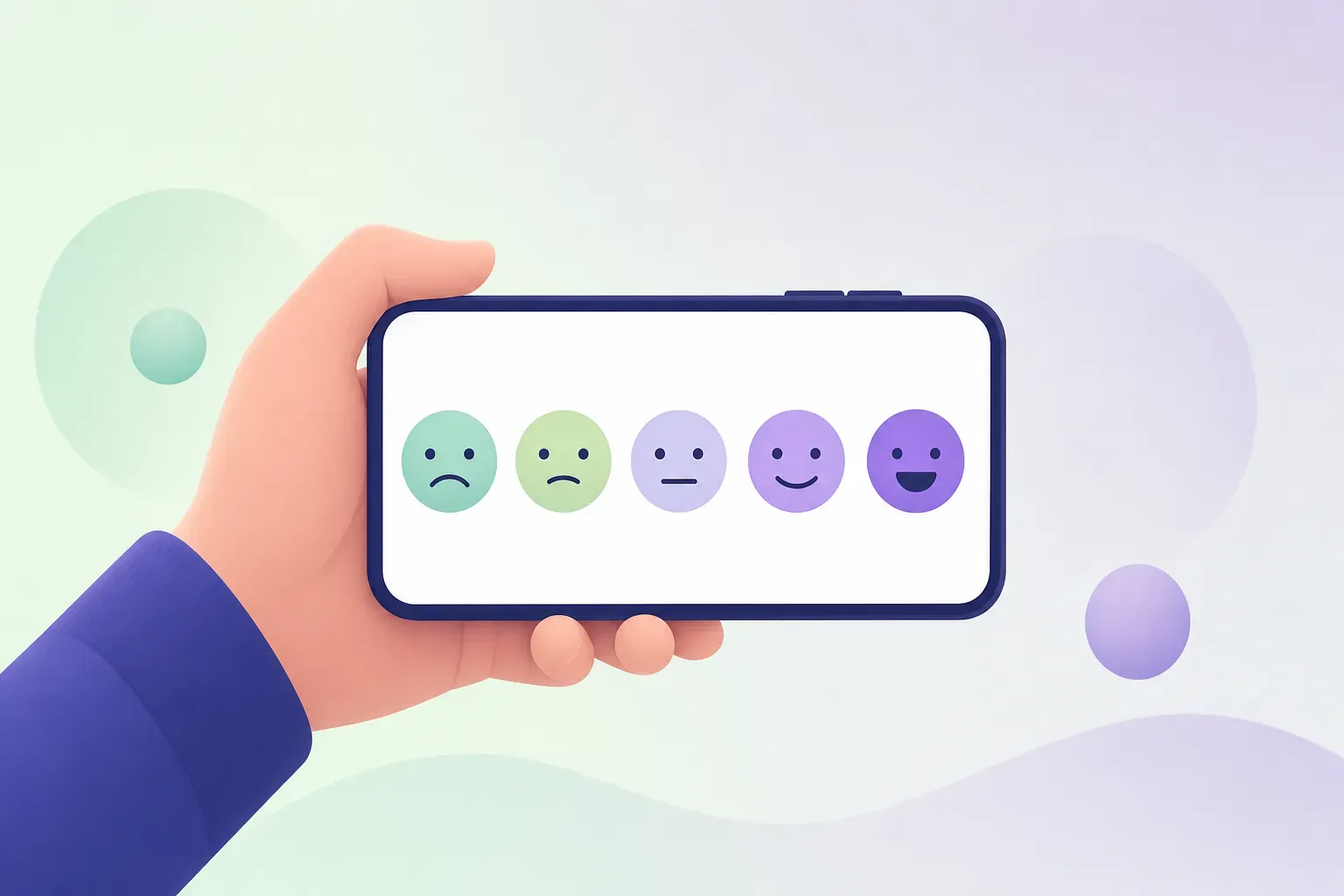
- A rating. Use 1–5 or five faces. Not 1–10; false precision produces noisy data and slower logging. Consistency across months matters more than granularity on any given day.
- Context tags. What were you doing? Who with? A handful of one-tap tags (work, friends, exercise, late caffeine, poor sleep) is the layer that later makes patterns findable. A rating without context can only ever tell you that you felt bad, never why.
- An optional note. One sentence, only when something needs remembering. Notes are seasoning, not the meal.
That third part is where paper templates and heavyweight apps both go wrong: they ask for paragraphs. Paragraphs are why people quit.
Step 2: Pick your medium
Paper (a notebook or a Year in Pixels grid): free, calm, screen-less. Its honest weaknesses: nothing reminds you, nothing timestamps you, and pattern-finding is entirely manual.
An app: reminders, real timestamps, and math. The field guide to choosing one is here; the short version is Daylio for simplicity, How We Feel for free emotional vocabulary, and MoodKit when you want the analysis layer this guide builds toward.
There’s no wrong answer for week one. There is a wrong answer for month three: whichever medium you’ve already stopped using.
Step 3: Anchor the habit to time, not willpower
- Schedule one fixed check-in. Evening works for most people: the day is summarizable and the habit pairs with an existing ritual (brushing teeth, plugging in the phone).
- Add moment-of logs when something notable happens. These timestamped spikes are the most diagnostic data you’ll collect.
- Remove every step you can. On iOS 17+, widgets can log in one tap from the Home or Lock Screen (the widget guide ranks who does this properly). MoodKit’s reminders even carry five mood buttons on the notification itself.
- Plan for missed days, because they’re coming. One skipped day means nothing. The dangerous moment is the second consecutive miss, when “I’ll restart Monday” thinking kills the whole record. Streak mechanics with forgiveness built in (MoodKit banks up to three streak freezes for exactly this) beat perfectionism. And never backfill guesses; a fake entry poisons the patterns you’re collecting all this for.
Step 4: Read your data (weeks 2–4)
Now the payoff phase. Three patterns are worth hunting first:
- Weekday rhythms. Most people have a reliably best and worst day of the week and can’t name either until the data does. Sunday dread and Wednesday slumps are real, findable things.
- Company and place. Which people and settings keep showing up on your best days? Your worst?
- The lag effects. Last night’s short sleep hitting this afternoon; yesterday’s alcohol dimming today. These delayed patterns are nearly invisible to memory and obvious in data.
On paper, do a monthly review: highlight your five best and five worst days, list what each had in common, and look for repeat offenders. In MoodKit, this step is automated: the Impact Leaderboard ranks your tagged activities (and, if you connect Apple Health, your sleep, exercise, and steps) by measured effect on your mood, with the day counts shown so you know how solid each claim is. Finding triggers specifically has its own guide.
Step 5: Test something (the step everyone skips)
A pattern is a hypothesis, not a conclusion. Maybe “bad sleep → bad Thursdays” is causal; maybe both trace back to Wednesday deadlines. The only way to know is to change one variable and watch.
The method, borrowed from n-of-1 practice: pick one habit, change it for one week, keep everything else normal, compare against your baseline. Full instructions live in the self-experiments guide; MoodKit runs these natively (try a habit, skip a habit, or measure next-day effects) with verdicts honest enough to say “this didn’t help.”
The trackers-that-work loop is: log lightly → find a pattern → test it → keep what works → repeat. Awareness alone fades. Tested changes compound.
The four failure modes (and their fixes)
- Over-tracking. Fifteen metrics, twice-daily journaling, burnout by Friday. Fix: rating + tags, once or twice a day, period.
- Vanity streaks. Logging to keep the number alive while learning nothing. Fix: a monthly review appointment with your own data.
- Correlation worship. “My data says family time lowers my mood” might really mean holidays are stressful. Fix: treat every pattern as a suspect awaiting an experiment, and read what the research actually supports.
- Tracking as rumination. If logging feelings makes you dwell darkly on them, lighten the system: fewer check-ins, simpler scale. If it consistently makes things heavier, that’s information worth bringing to a professional rather than an app.
A starter template
Tonight, answer three things: Mood (1–5). What filled the day (3 tags max). One line if something stood out. That’s the entire practice. Two weeks of that beats every elaborate system you’ve ever abandoned, and it’s enough data for any good tool to start showing you the shape of your own weeks.
Frequently asked questions
How often should I log my mood?
Once a day is the sustainable minimum, ideally at a fixed time like evening. Twice (midday and evening) captures more texture. Logging at the moment something notable happens adds the most useful data of all. More than that risks making tracking a chore you'll quit.
Should I use an app or paper?
Paper is calmer and free; apps remind you, timestamp entries, and find patterns you'd miss. If you've never tracked before, a week on paper teaches you what you want from an app. If you've already quit paper once, go digital with reminders.
How long until mood tracking shows patterns?
Expect first hints at two weeks and trustworthy patterns around a month. Research on mood apps notes that insights depend on enough data across time — which is why consistency beats intensity, and why apps show early feedback to keep you going.
What scale should I use to rate my mood?
A simple 1–5 scale (or five faces) is the sweet spot: fast to answer honestly and consistent across months. Ten-point scales sound precise but produce noisy answers — nobody reliably knows a 6 from a 7 at 11 pm.
Keep reading

Does Mood Tracking Actually Work? What the Research Says
The honest evidence on mood tracking: what studies show it helps with, where the benefits stop, the illusory-correlation trap, and how to track so it works.
· 3 min read

How to Find Your Mood Triggers (With Data, Not Guesswork)
A practical method for identifying what really sets off your bad days: build a suspect list, log context for two weeks, read the patterns, then test one change.
· 3 min read

The 10 Best Mood Tracker Apps in 2026, Compared Properly
Ten mood trackers, one honest table: prices, free tiers, insight depth, and who each app is actually for — including where our own app doesn't fit.
· 6 min read