How We Feel vs MoodKit (2026): Name Feelings or Explain Them?
The MoodKit Team
· 4 min read
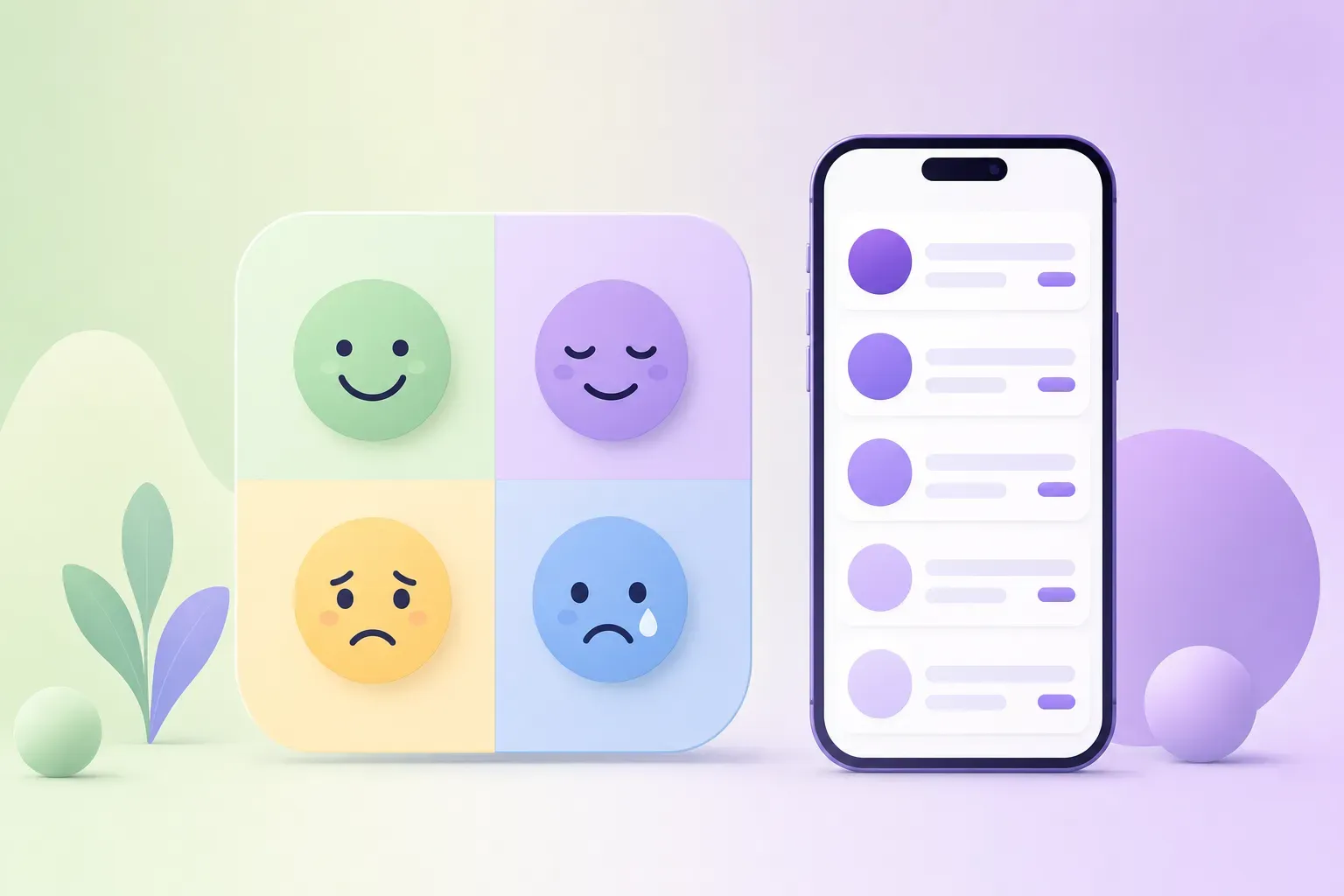
How We Feel is the app this industry doesn’t deserve: built by a nonprofit with Yale’s emotion scientists, completely free, no ads, 4.9 stars from 29,000 people. If this comparison were a popularity contest, we’d lose it. (Yes, we: MoodKit is our app. Bias declared.)
It’s not a popularity contest, though. It’s a question about what you need next. How We Feel teaches you to name what you’re feeling. MoodKit measures what’s causing it. Those sound similar and are almost entirely different skills.
The case for How We Feel
The Mood Meter is the best emotional-vocabulary tool on a phone. A four-quadrant grid (energy × pleasantness) with 140+ emotion words nudges you past “fine” and “bad” toward “restless,” “content,” “drained.” There are one-minute videos from actual scientists, gentle check-in prompts, and a Friends feature for sharing feelings with people you trust.
And the price is zero. Forever, with no catch. For a teenager, a student, or anyone starting from scratch with feelings-naming, this is the right first app and we’ll say so plainly.
Where it runs out
Four things send How We Feel users looking elsewhere, per years of its own reviews:
- The analytics ceiling. “This desperately needs graphs” is the evergreen request. You collect beautifully labeled emotions and get very little analysis back.
- No streak engine. The app deliberately avoids gamification, which is principled and also why a lot of logging habits quietly die.
- iOS 17+. Older iPhones are locked out.
- The AI additions. An optional reflect chat and AI weekly review, cloud-powered. Some users welcomed them; a vocal chunk of the community did not.
How We Feel vs MoodKit at a glance
| How We Feel | MoodKit | |
|---|---|---|
| Price | Free (nonprofit) | Trial, then $39.99/yr or $79.99 lifetime |
| Superpower | Naming emotions precisely | Explaining what drives your mood |
| Emotion vocabulary | 140+ words, the best there is | 5 moods + unlimited custom |
| Analytics | Thin, by its users’ own account | Ranked drivers, combos, weekday rhythms, day counts shown |
| Self-experiments | No | Try / skip / next-day, with verdicts |
| Apple Health | Reads sleep, exercise, steps | Reads the same + writes State of Mind (iOS 18) |
| AI | Optional cloud AI features | None, on principle |
| Minimum iOS | 17 | 15 |
| Streaks | No | Yes, with banked freezes |
| App lock | No | Face ID / Touch ID included |
| Languages | English + Spanish | 11 |
Facts checked August 2026.
The case for MoodKit
MoodKit starts where the Mood Meter stops. Fine, you’re “drained” — why?
Check-ins are one tap plus activity tags. From there, the Impact Leaderboard ranks your activities by measured effect on your mood, with the day counts visible under every claim. Hidden Patterns catches activity combinations. Apple Health sleep, exercise, and steps rank right alongside your tags. And when a pattern looks promising, a self-experiment tests it for real: try the habit for a week, skip it for a week, or check next-day effects.
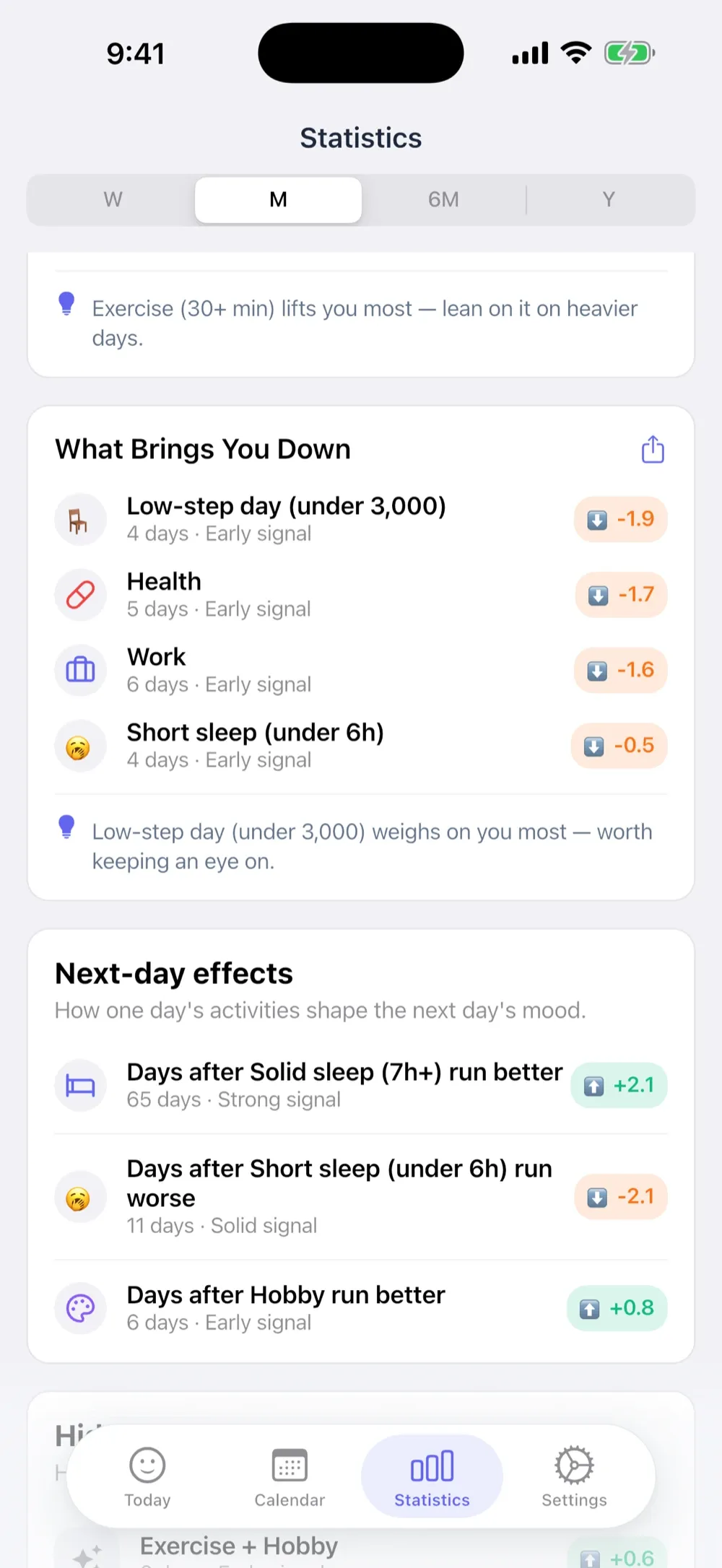
On the AI question, MoodKit is the counter-position: nothing you feel is ever sent to a model, anywhere. Every insight is plain statistics computed on your device, and you can always see why it says what it says. No account exists to leak.
The catches, stated plainly: MoodKit costs money after its trial, it has no emotion-vocabulary trainer, no sharing features, and it’s Apple-only.
Which one, or both?
Start with How We Feel if you’re new to this and “what am I even feeling?” is still the hard question. It’s free and it’s excellent at exactly that.
Move to MoodKit when the question becomes “what’s doing this to me?” That transition is real; the analytics ceiling that frustrates How We Feel’s power users is precisely where MoodKit begins.
Running both isn’t silly either. One trains naming, the other does the measuring. If you do pick one, our fuller How We Feel alternatives guide maps the whole field, and the 10 best mood trackers of 2026 places them all side by side.
Frequently asked questions
Is How We Feel really completely free?
Yes. It is run by a nonprofit (The How We Feel Project), costs nothing, shows no ads, and sells nothing. It sustains itself on donations. In this category, that makes it unique.
Does How We Feel use AI?
It has optional AI features (a reflect chat and an AI weekly review) powered by a cloud model, which you can simply not use. Some of its own users have pushed back on the AI additions. MoodKit takes the opposite route: no AI at all, every insight is plain statistics computed on your device.
Which app has better analytics?
MoodKit, and it isn't close — that is its entire specialty. How We Feel's most-requested missing feature, per years of user feedback, is deeper graphs and analysis. MoodKit ranks activities by measured mood impact, shows day counts, and runs self-experiments.
Can I use both apps together?
Reasonably, yes. Some people use How We Feel's Mood Meter to get better at naming what they feel, and MoodKit to track moods against activities and find what actually drives them. They train different muscles.
Keep reading
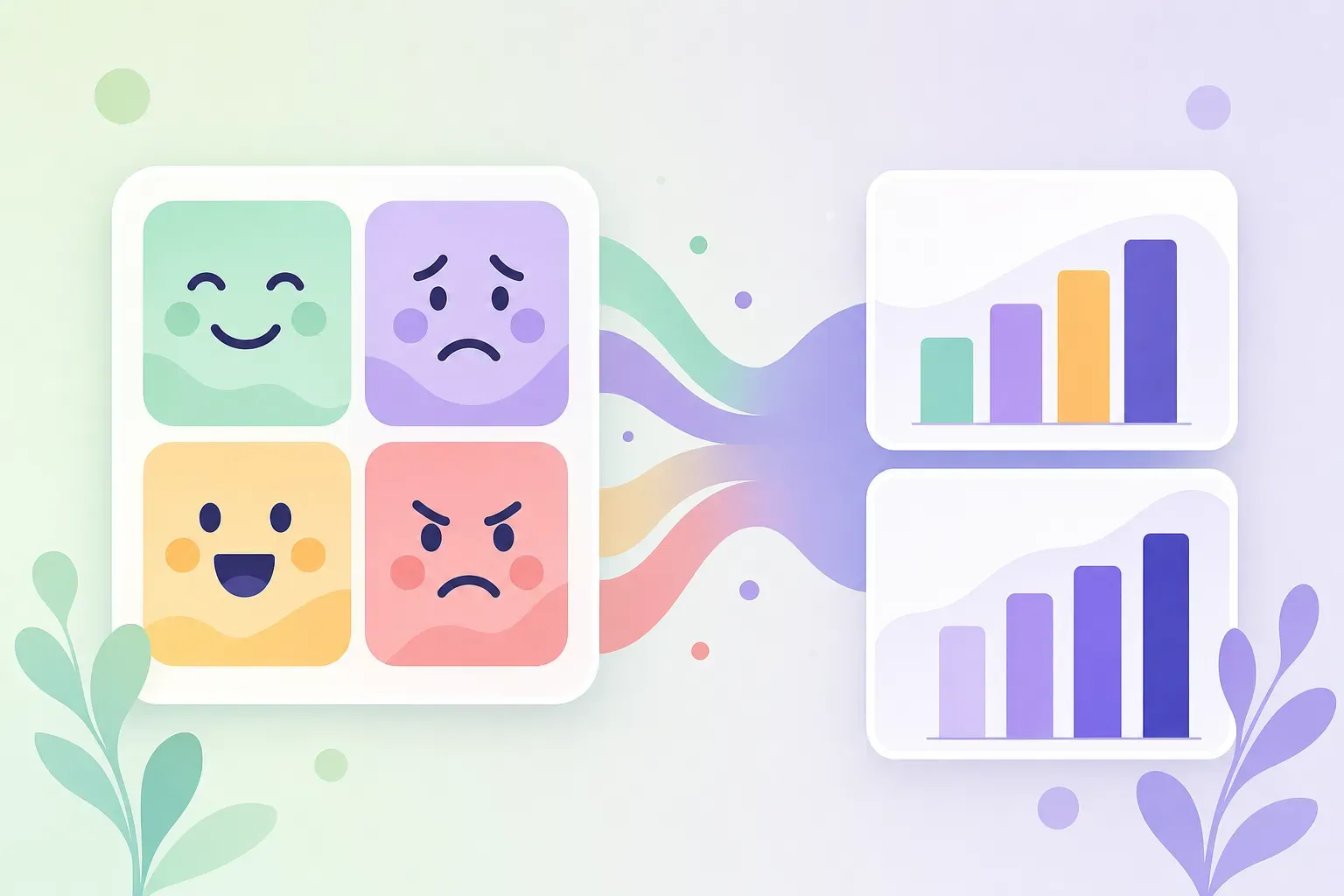
6 How We Feel Alternatives in 2026 (Streaks, Insights, iOS 15)
How We Feel is free and lovely — but thin on analytics, streak-free, and iOS 17-only. Six alternatives matched to the gap that's sending you looking.
· 4 min read

Apple's State of Mind vs MoodKit (2026): Built-In or Dedicated?
iOS logs moods for free with State of Mind. So when is a dedicated tracker worth paying for? A sourced comparison — and why the two work best together.
· 4 min read
The 10 Best Mood Tracker Apps in 2026, Compared Properly
Ten mood trackers, one honest table: prices, free tiers, insight depth, and who each app is actually for — including where our own app doesn't fit.
· 6 min read