Apple's State of Mind vs MoodKit (2026): Built-In or Dedicated?
The MoodKit Team
· 4 min read
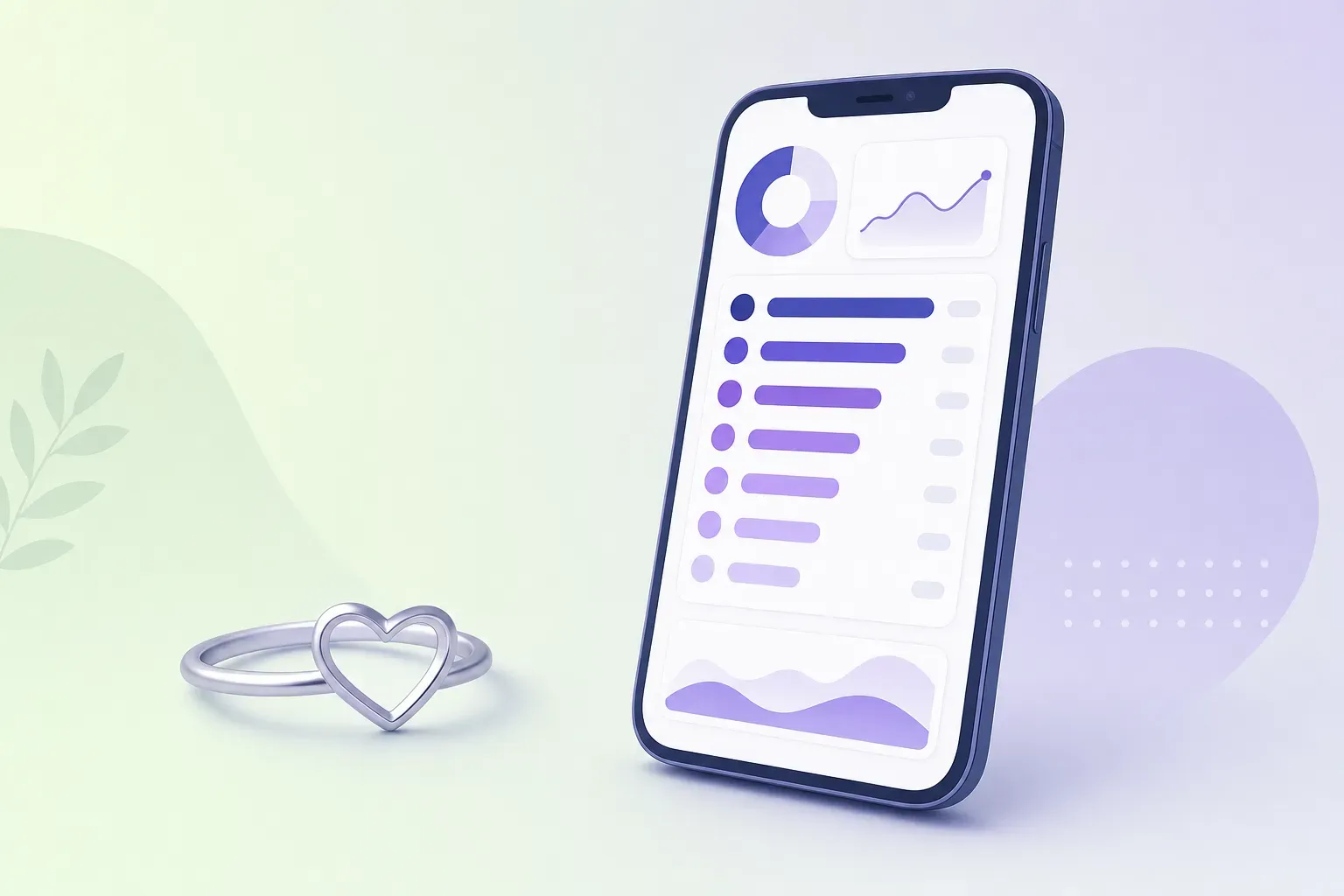
Every mood tracker in 2026 competes with a free rival that ships inside the iPhone. Apple’s State of Mind logging (Health app, iOS 17+) is well-built, deeply private, and one tap from the Lock Screen. So a fair person should ask: why would anyone pay for MoodKit?
We build MoodKit, which makes us exactly the wrong people to trust blindly and exactly the right people to answer precisely. Here’s the line between what Apple gives you free and what it deliberately left for apps.
What State of Mind does well
- Frictionless capture. Momentary emotions or daily moods, a pleasant-unpleasant slider, emotion words, broad context tags. Loggable from the Lock Screen, Smart Stack, or an Apple Watch.
- Life Factors context. Health automatically charts your mood against sleep, exercise, daylight, and mindful minutes. No manual work.
- Reference-grade privacy. On-device, end-to-end encrypted sync, per-app permission gates.
- Permanence. Health is the archive that outlives any app you install. Data you put there is yours for decades.
For light, occasional logging, this is honestly enough. Stop reading, set up the Lock Screen widget, done.
Where Apple stopped
Spend a month with it and you’ll meet the same three walls the r/QuantifiedSelf crowd keeps posting about (their words: has anyone gotten real correlations out of State of Mind?):
- No custom factors. Apple’s context tags are categories like “work” and “family.” Your actual suspects — late caffeine, that one meeting, doom-scrolling — can’t be tagged, so they can never be implicated.
- It plots, it doesn’t conclude. Life Factors shows curves next to curves. Which factor matters most? Is the sleep effect big or trivial? How many days back that up? Silence.
- No way to test anything. There’s no mechanism to try a change for a week and get a verdict.
None of this is Apple being lazy. It built the recording standard and left interpretation to third parties. That’s the opening MoodKit lives in.
State of Mind vs MoodKit at a glance
| Apple State of Mind | MoodKit | |
|---|---|---|
| Price | Free, built-in | Trial, then $39.99/yr or $79.99 lifetime |
| Requires | iOS 17+ | iOS 15+ (SoM write needs iOS 18) |
| Capture | Slider + emotion words + broad tags | One-tap moods + your own activities, timestamped |
| Custom activities | No | Unlimited |
| Analysis | Timeline + side-by-side charts | Ranked drivers with day counts, combos, weekday rhythms |
| Experiments | No | Try / skip / next-day, with verdicts |
| Streaks & reminders | No streaks | Streaks with banked freezes, one-tap reminder logging |
| Year in Pixels | No | In-app + Home Screen widget |
| Writes to Apple Health | It is Apple Health | Yes, State of Mind entries (iOS 18) |
Facts checked August 2026.
The trick: this isn’t either/or
Here’s what most comparisons miss. MoodKit is built to sit on top of Apple’s system, not against it:
- On iOS 18, every MoodKit check-in can write back to Health as a State of Mind entry. Health remains your permanent, app-independent archive; MoodKit supplies the analysis Apple withheld.
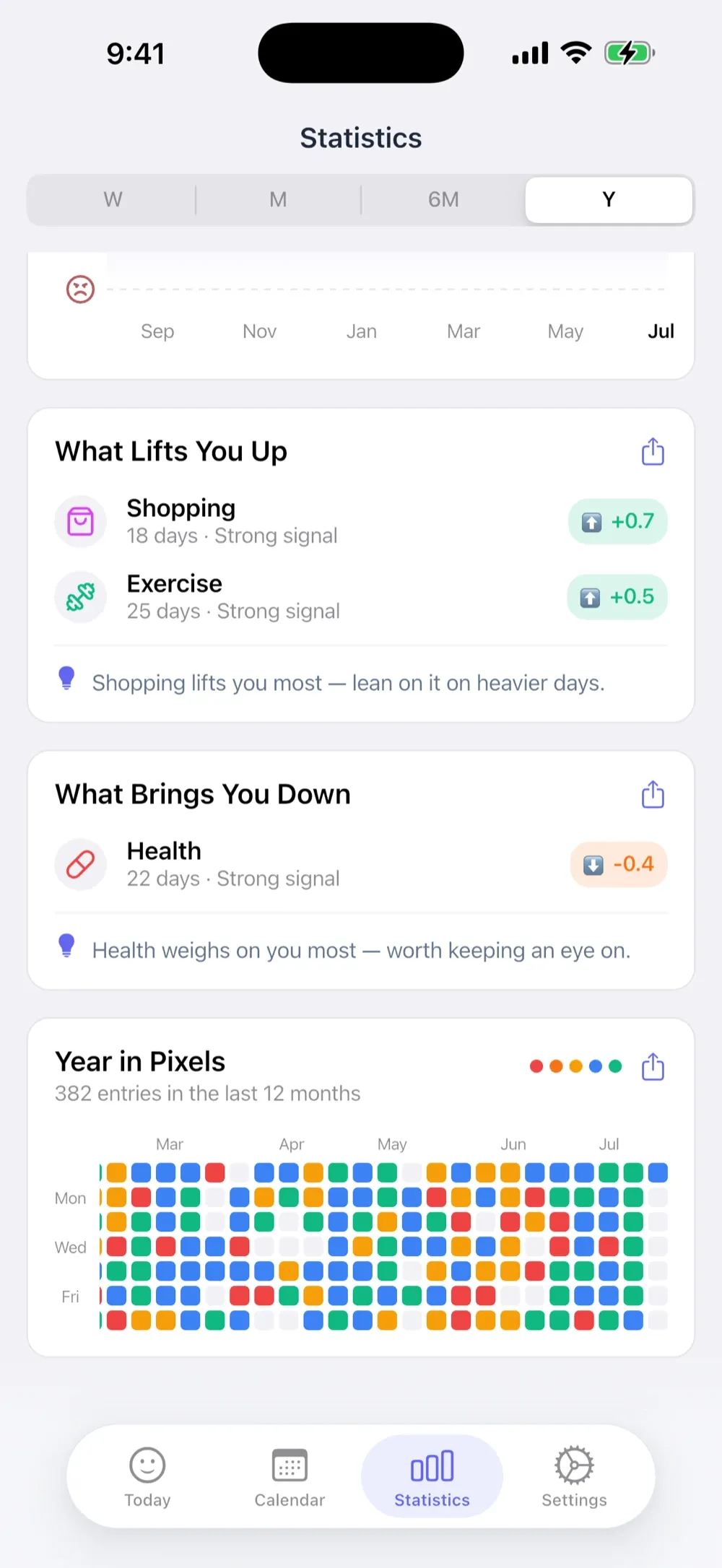
- In the other direction, MoodKit reads sleep, exercise, and steps (optional, off by default) and ranks them alongside your tagged activities in the Impact Leaderboard.
So the honest architecture is: Apple owns storage and trust, MoodKit owns explanation. If you ever delete MoodKit, your State of Mind history stays in Health, intact. We think that’s how apps in this category should behave, and our full Apple Health guide goes deeper on the setup.
Where that leaves you
Stay with State of Mind alone if you log a few times a week and mostly want a private record. It’s free and it’s good.
Add MoodKit the day you catch yourself asking why. Custom activities, ranked drivers with visible sample sizes, experiments with honest verdicts, streaks that survive a busy day — all computed on your device, no AI, no account, feeding your entries right back into Health where they belong.
Wondering what else runs well on an iPhone? The best iPhone mood trackers of 2026 covers the whole field.
Frequently asked questions
Is Apple's State of Mind free?
Yes, it's built into the Health app on iOS 17 and later, with logging from the Lock Screen and Apple Watch. There's nothing to buy and the data stays in Apple Health's encrypted storage.
Why use a mood tracker app if the iPhone has one built in?
Because State of Mind records but doesn't explain. It has no custom activities, no ranking of what affects you, and no way to test a habit change. Dedicated apps add that layer; MoodKit specifically ranks your activities and health factors by measured mood impact and runs experiments.
Can MoodKit and State of Mind work together?
Yes, and that's the recommended setup. On iOS 18, MoodKit saves every check-in to Apple Health as a State of Mind entry, so Health stays your permanent archive while MoodKit does the analysis. It also reads sleep, exercise, and steps as mood factors (optional, off by default).
Is State of Mind data private?
Very. It lives in Apple Health with on-device storage and end-to-end encrypted sync, and apps can only read it with your explicit permission. MoodKit processes everything on your device too — no account, no AI, no cloud analysis.
Keep reading
Mood Tracking with Apple Health: State of Mind, Sleep & Steps
How Apple's State of Mind logging works, what it can't tell you, and how apps like MoodKit turn Health data — sleep, exercise, steps — into ranked mood factors.
· 5 min read
How We Feel vs MoodKit (2026): Name Feelings or Explain Them?
How We Feel teaches you to name emotions with scientific precision, free. MoodKit measures what drives them. A fair look at which app fits your stage.
· 4 min read
Best Mood Tracker Apps for iPhone & iPad in 2026 (7 Picks)
The mood trackers that actually use the iPhone well — widgets, Lock Screen logging, Apple Health, State of Mind — ranked by how deep the iOS integration goes.
· 4 min read