Does Mood Tracking Actually Work? What the Research Says

The MoodKit Team
· 3 min read
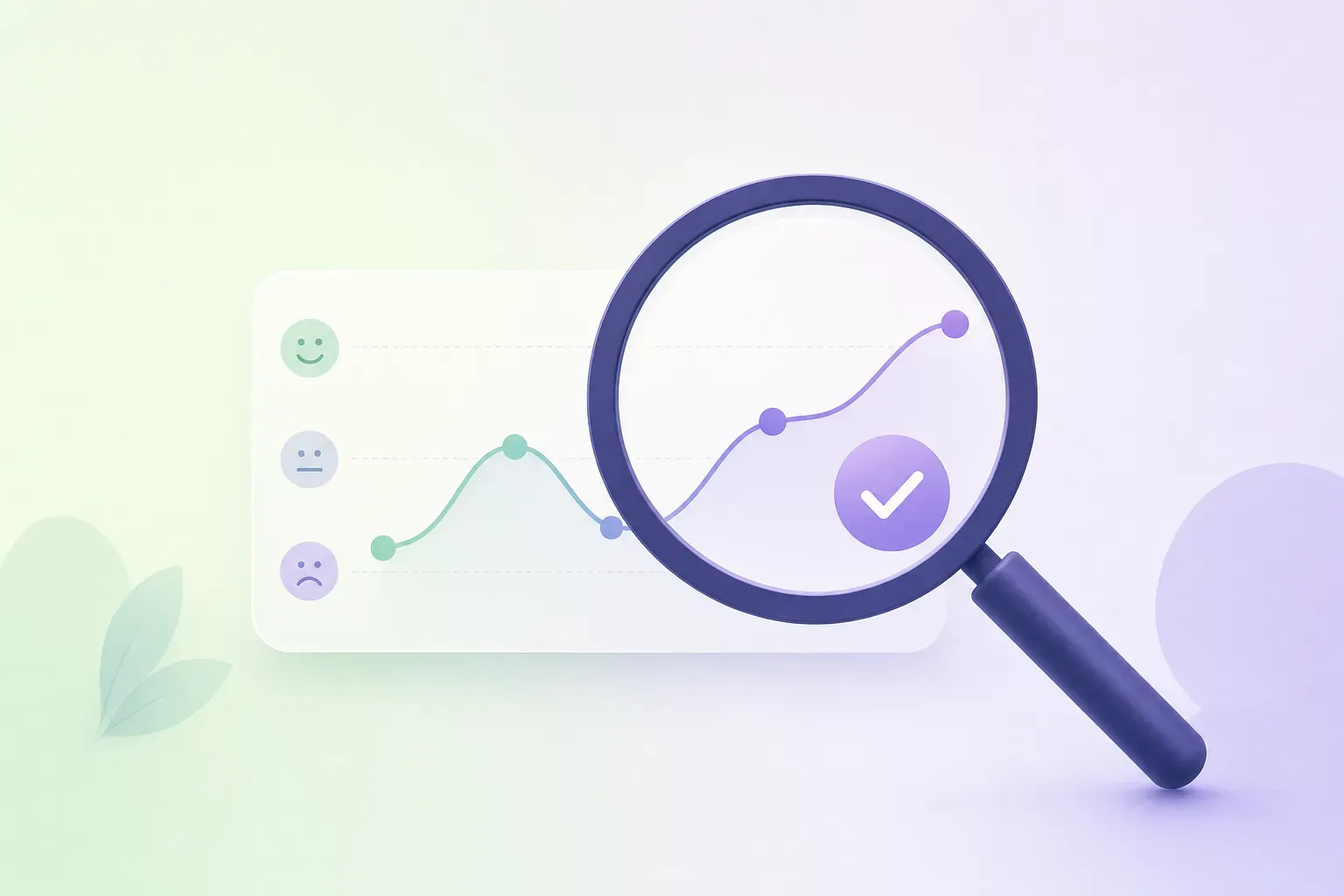
Fair question, and it deserves a straight answer rather than a sales page: mood tracking works for specific, modest things, and the research is honest about the limits. Since we build a mood tracker (MoodKit — bias on the table), we have every incentive to oversell this. We’d rather show you the actual evidence, because the limits turn out to be design requirements.
What studies actually find
The most direct evidence comes from qualitative and app-analysis research on real users:
Awareness and reflection are the core, replicated benefits. An interview study of mood-app users published in JMIR Mental Health (PMC8387890) found people used tracking to improve self-awareness, promote reflection, relate moods to lifestyle factors, and sometimes intervene on their own mood. That matches the large 2018 analysis of mood-tracking apps and reviews (PMC5977660): users value these tools chiefly for understanding themselves, not as treatment.
Naming feelings helps in itself. The act of labeling an emotion with precision — what psychologists call affect labeling — is associated with reduced emotional intensity. It’s part of why “just” logging can feel stabilizing, and why vocabulary-first apps like How We Feel exist.
Experts see value, with guardrails. Work gathering clinical and research perspectives on self-tracking for mental wellness (PMC5600512) supports self-monitoring as a useful practice while stressing the caveats below.
So: does it work? For knowing what’s going on with you, yes, credibly. For anything grander, keep reading.
Where the honest caveats live
1. The data has to exist. The JMIR study is blunt about this: patterns and insights require “sufficient data collected across time.” Sporadic logging produces noise wearing a chart costume. This is the boring truth behind every consistency feature ever shipped — reminders, streaks, one-tap widgets.
2. Illusory correlations are a real hazard. The same research warns that self-trackers can land on connections that are “illusory, rather than actual.” Your data says gym days are bad days; reality says you only force yourself to the gym in already-rotten weeks. Any app that hands you correlations without caveats is inviting this error. (It’s why MoodKit shows the day count behind every driver and labels thin data as thin — and why we built experiments to test patterns rather than trust them.)
3. Tracking is not treatment. No serious study claims logging moods treats a condition. The research frame is self-monitoring that supports awareness and, where relevant, care. Apps implying more deserve your suspicion.
4. For some people, it backfires. Monitoring can tip into rumination. If logging consistently makes feelings heavier, the evidence-based move is a lighter system — or a conversation with a professional instead of an app.
Reading the research as a design checklist
Flip each finding and you get the spec for tracking that works:
| The evidence says | So your system needs |
|---|---|
| Benefits come from awareness + reflection | A review habit, not just a logging habit |
| Insights need sufficient data over time | Entries that take seconds, reminders, forgiveness for missed days |
| Context is what links mood to life | Activity tags on every entry, not bare ratings |
| Illusory correlations happen | Visible sample sizes, and experiments before conclusions |
| Reactivity can turn negative | A system light enough to quit ruminating with |
That table is, not coincidentally, the blueprint for our full how-to-track guide — and for MoodKit itself, whose whole design (one-tap logging, day counts under every claim, honest experiment verdicts, no AI theatrics) is an attempt to be the app the caveats demand.
The one-line verdict
Mood tracking reliably delivers self-knowledge when done lightly and consistently, with context attached and conclusions tested. It delivers nothing when done heavily and briefly, and it treats nothing at all. Track like a curious scientist rather than a patient or a perfectionist, and the research is on your side.
Frequently asked questions
Is there scientific evidence for mood tracking?
Yes, with modest claims. Interview and app-analysis studies find users gain self-awareness, reflect more, and connect moods to lifestyle factors. What's NOT established is that tracking alone treats anything. It's an awareness tool with real but bounded benefits.
Can mood tracking replace therapy?
No, and be wary of anything implying it can. Research frames tracking as self-monitoring that can support care — better information for you and, if you choose, your clinician. Treatment is a different category.
Why do people quit mood tracking?
The studied reasons are mundane: effort, forgetting, and apps that give nothing back. Systems that survive are tiny (seconds per entry), have reminders, and return visible insights that make continued logging feel worthwhile.
What's an illusory correlation in mood data?
A pattern that looks causal but isn't — like "family time lowers my mood" when the real driver is that family visits cluster around stressful holidays. Researchers flag this as a genuine risk of self-tracking, which is why testing patterns beats trusting them.
Keep reading
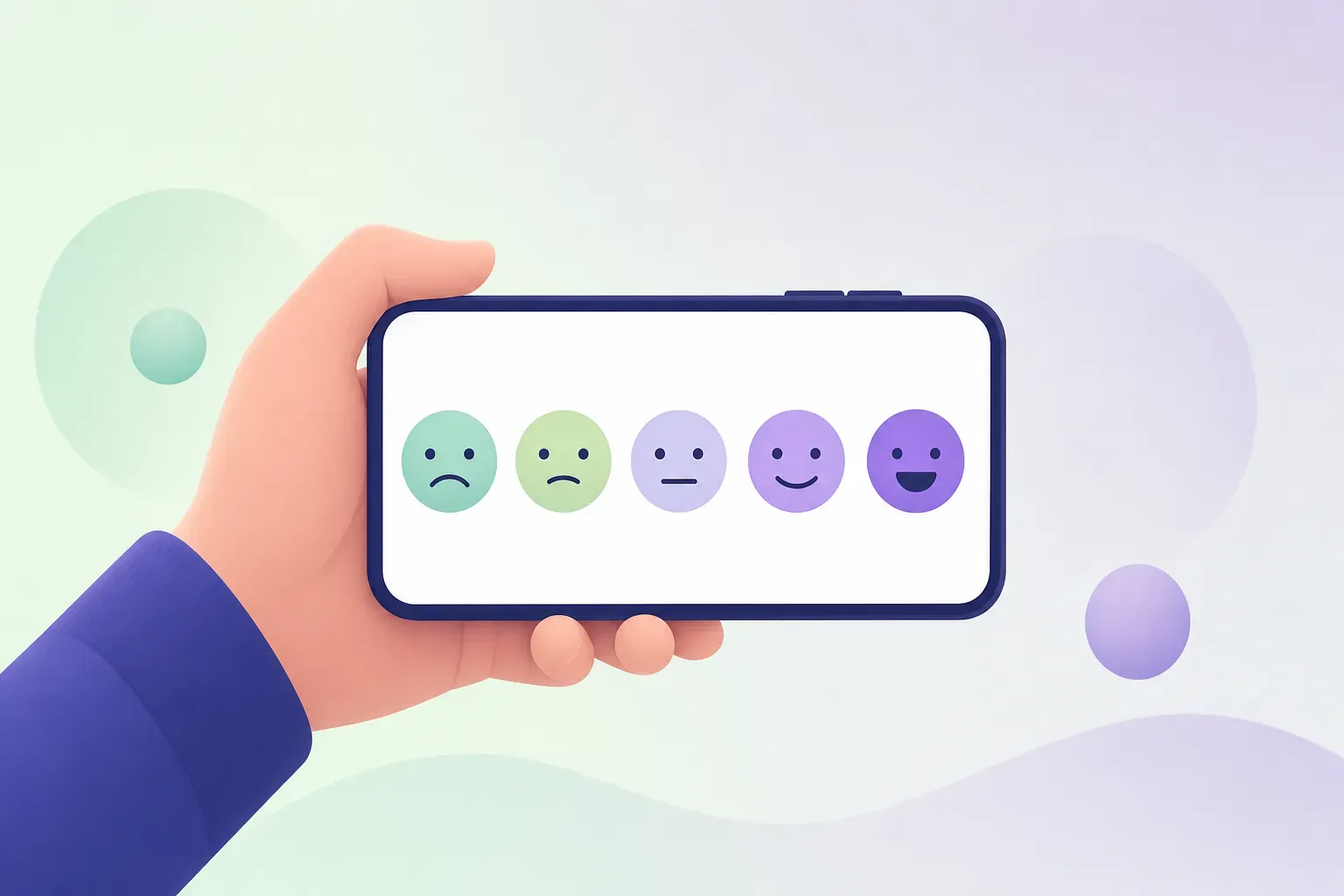
How to Track Your Mood: The Complete 2026 Guide
A practical system for mood tracking that survives real life: picking a scale, tagging context, staying consistent, reading patterns, and testing changes.
· 5 min read
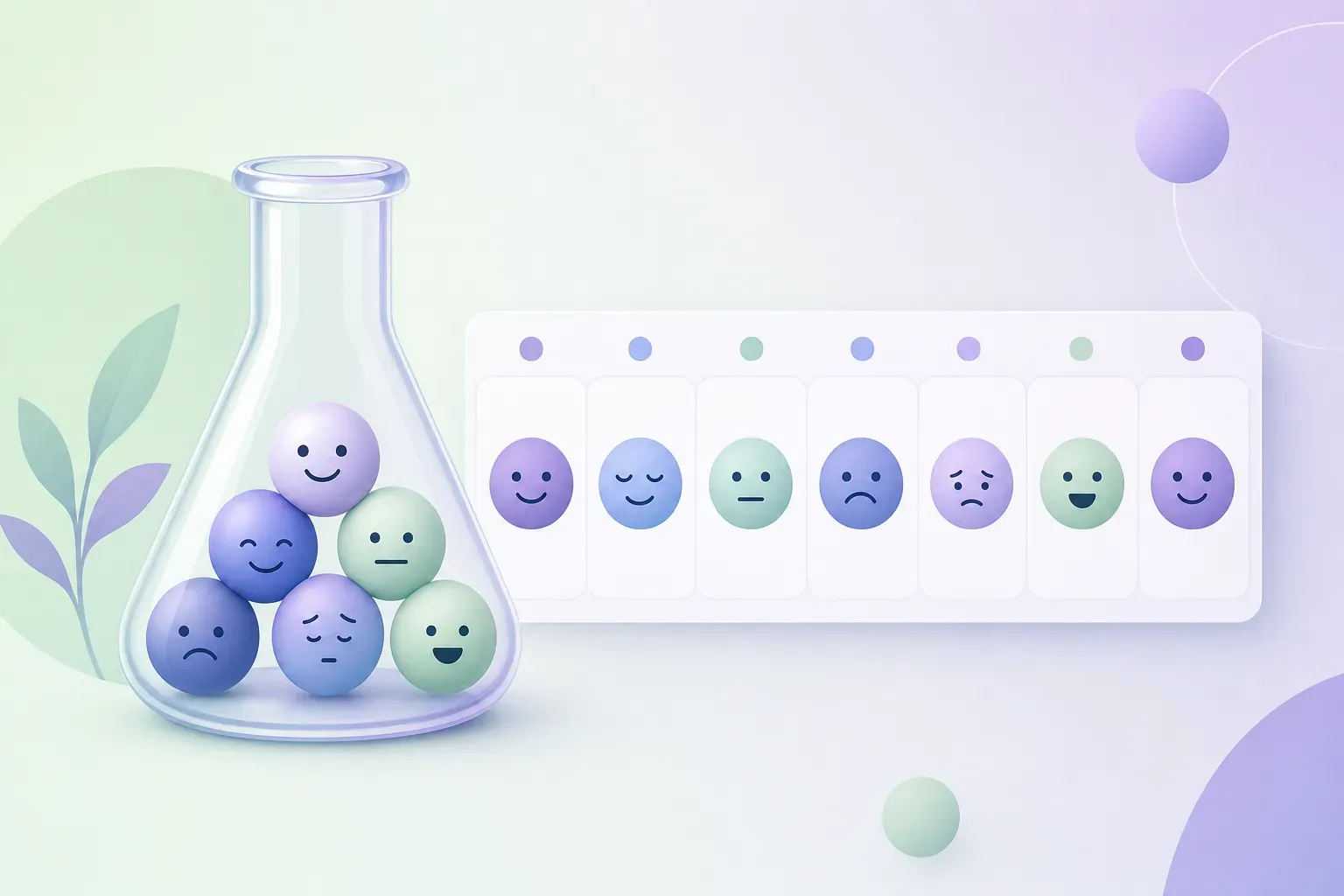
Self-Experiments: Test What Actually Lifts Your Mood
The n-of-1 method for mood: how to test one habit for one week and get an answer you can trust — including the traps that fool most self-experimenters.
· 4 min read

The 10 Best Mood Tracker Apps in 2026, Compared Properly
Ten mood trackers, one honest table: prices, free tiers, insight depth, and who each app is actually for — including where our own app doesn't fit.
· 6 min read