Self-Experiments: Test What Actually Lifts Your Mood

The MoodKit Team
· 4 min read

Mood advice all sounds plausible. Morning walks, no caffeine after lunch, journaling, cold showers, less news. Plausible is cheap. The only question that matters is embarrassingly specific: does it work on you? And there’s a method for exactly that question, older than the apps and beloved by the quantified-self crowd: the n-of-1 experiment. One person, one variable, one honest verdict.
People have run these on themselves for years — Mark Koester’s classic write-up of tracking and testing his own mood is a great rabbit hole, and researchers studying self-tracking for mental wellness (PMC5600512) treat structured self-monitoring as a legitimate practice with known pitfalls. This guide is the method plus the pitfalls. (Disclosure: we build MoodKit, which runs these experiments natively. The manual version works with any tracker and a calendar.)
The protocol
1. Arrive with a suspect, not a whim. Two weeks of tagged mood logging (method here) nominates candidates: a tag that keeps appearing on your worst days, or a “lifts you up” pattern you’re not sure deserves the credit. Testing a random internet tip is fine; testing your own data’s suspect is better. (Trigger-hunting guide, if you need the suspect first.)
2. Choose the experiment type. There are three, and picking the right one matters:
- Addition: do the thing daily for a week (morning walk, midday break outdoors).
- Elimination: skip the thing for a week (late caffeine, evening news, nightcap). Elimination is underrated; removing a drag often beats adding a lift.
- Next-day: for suspects with a lag — does a late night hurt tomorrow’s mood? Sleep-related tests are almost always next-day tests.
3. Freeze the baseline first. Your comparison is the weeks before the experiment, measured the same way. Decide the baseline window before starting and don’t move it afterward; shifting the goalposts post-hoc is how self-experiments lie to their owners.
4. One variable, one week, everything else boring. Don’t start the walk experiment the week you also quit sugar, change jobs, or host relatives. If the week gets contaminated by a life event anyway, void it and rerun — a clean rerun beats a polluted conclusion every time.
5. Log the outcome, not the enthusiasm. Keep your normal mood log through the week. Rate days by how they felt, not by how invested you are in the experiment working. This sounds obvious and is the hardest rule on the page.
6. Apply the slip rule. Miss the habit once, note it and continue. Twice or more, void the week. Partial compliance produces data that flatters whatever you already believed.
7. Read the verdict coldly. Compare experiment week against baseline. A clear lift you can see in the numbers: keep the habit. No difference: drop it guilt-free — that’s a successful experiment that just saved you a pointless routine. Ambiguous: rerun once before believing anything.
The traps
- Expectancy. You wanted the walks to work, so the week felt better. Antidote: judge only the logged numbers, entered in the moment, not the story you remember.
- The weekend confounder. A Monday–Sunday experiment week compared against a baseline with different weekday mix will lie to you; weekday effects are huge. Compare like-for-like spans.
- Effect fishing. Rerunning until one week finally “works,” then declaring victory. One rerun for contamination is hygiene; five reruns is astrology.
- Eternal experiments. Extending “one more week” forever means the habit never faces judgment. Fixed window, verdict, decision, next.
The automated version
Everything above is checklist-able by hand. MoodKit bakes the checklist into the product because unforced humans (us included) cheat: it freezes a 30-day baseline before the week starts, supports all three experiment types (try, skip, and next-day), enforces the slip rule on elimination weeks, requires enough logged days to judge at all, and issues a verdict that includes “this didn’t help” — with the day counts shown, and a standing reminder that one week of n-of-1 is evidence about you, not proof of cause.
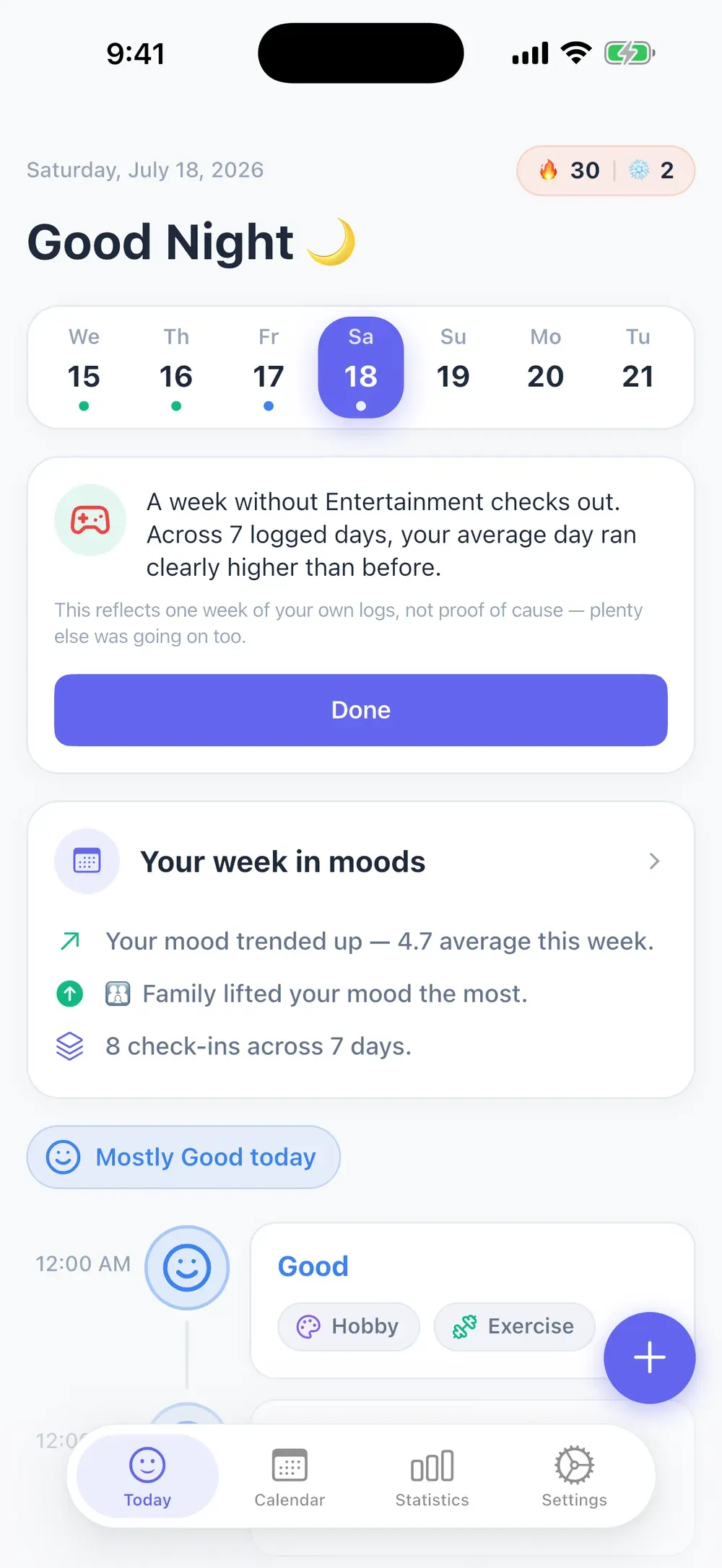
Past experiments accumulate into a tally (three lifts confirmed, one didn’t help), which quietly becomes the most personal document your phone holds: a list of what verifiably works on you.
Start this week
Pick the smallest suspicious thing. Skip late caffeine for seven days, or take the ten-minute morning walk. One variable, honest logs, cold verdict. Whatever the result, you’ll know something about yourself that no amount of plausible advice could tell you — and knowing beats guessing, which is the whole case for tracking anything.
Frequently asked questions
What is an n-of-1 experiment?
An experiment with a sample size of one: you. You change a single variable for a set period, keep everything else normal, and compare the result against your own baseline. It can't produce universal truths, but it's the right tool for "does this work for me?"
How long should a mood experiment run?
A week is the sweet spot: long enough to smooth over one-off bad days, short enough that you'll actually finish. Next-day effects (like sleep) reveal themselves within the week; slower-moving changes may deserve a second week before you judge.
What if I slip during an experiment?
One slip: note it and continue. More than that, void the week and rerun rather than squinting at contaminated data. MoodKit enforces this automatically — its elimination experiments void the verdict if you slip more than one day.
Why did my experiment show no effect?
Three usual reasons: the habit genuinely doesn't move your mood (a valuable answer — stop forcing it), the week was contaminated by something bigger, or the effect is real but smaller than a week can detect. A null result that saves you from a pointless routine is a win.
Keep reading

How to Find Your Mood Triggers (With Data, Not Guesswork)
A practical method for identifying what really sets off your bad days: build a suspect list, log context for two weeks, read the patterns, then test one change.
· 3 min read

Does Mood Tracking Actually Work? What the Research Says
The honest evidence on mood tracking: what studies show it helps with, where the benefits stop, the illusory-correlation trap, and how to track so it works.
· 3 min read
How to Track Your Mood: The Complete 2026 Guide
A practical system for mood tracking that survives real life: picking a scale, tagging context, staying consistent, reading patterns, and testing changes.
· 5 min read