Winter Arc Mood Tracking: Prove Your 90-Day Reset Is Working
The MoodKit Team
· 5 min read
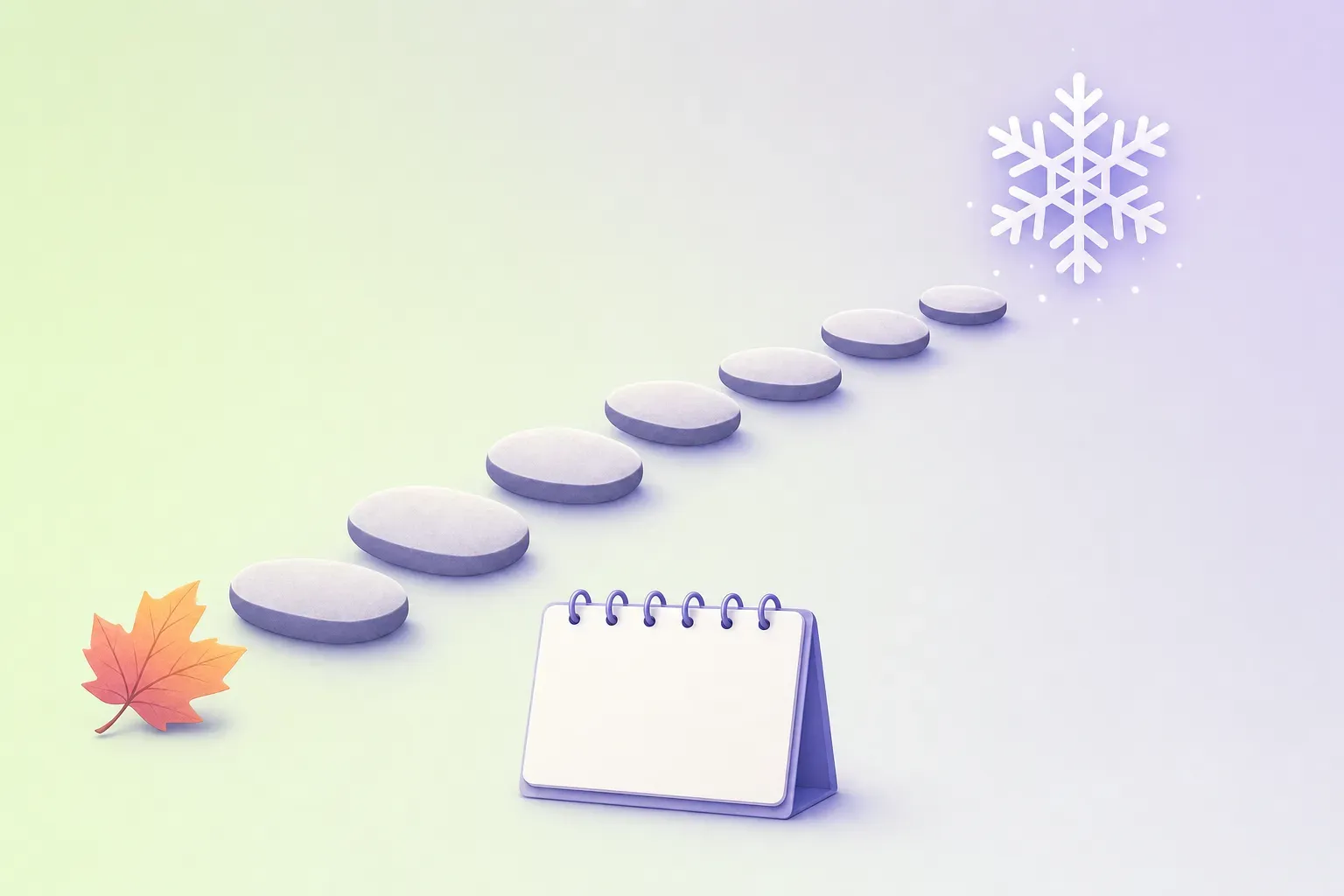
October 1 is the new January 1, at least on TikTok. The “Winter Arc” is the idea that the last three months of the year, when the light goes and everyone else coasts toward the holidays, are the best time to lock in: early alarms, the gym, a reading goal, a phone curfew, whatever you choose. Self-development creator Carly Berges is credited with coining it, the meme surfaced in fall 2022, and it went properly viral in 2024. This year’s version is already filling feeds.
The appeal is real. As therapist Simone Saunders told Bustle, “people tend to gravitate towards transitional points throughout the year to start new goals, check in with themselves, and engage in new routines.” The flaw is also real: a Winter Arc has rules but no scoreboard. Ninety days later you know whether you kept the rules. You don’t know whether the rules did anything.
This guide fixes that with one addition: a mood check-in next to the habits. (Disclosure: we build MoodKit, the tracker used in the examples; the method works with any app that can rank tagged activities.)
Why “did I keep the rules” is the wrong question
Every Winter Arc post measures compliance. Days in a row at the gym, mornings without the snooze, weeks without sugar. Compliance is easy to count and easy to post, which is why it’s the metric. But the promise of the arc isn’t “I did hard things for 90 days.” It’s “I came out of winter better than I went in.” That’s a mood outcome, and nobody’s measuring it.
Meanwhile the season is running its own experiment on you. Daylight shrinks, the clocks go back, and for a lot of people mood slides in October regardless of what they do about it; the autumn baseline guide covers that curve. Without a mood record, a Winter Arc can’t tell the difference between “the 5:30 alarm is working” and “the 5:30 alarm is making a seasonal dip worse.” Both feel like discipline from the inside.
The mood-first Winter Arc, in three steps
1. Pick three rules, not ten. Three habits that fit inside an ordinary day and that you’d genuinely like to keep past December. Saunders’ advice from the same piece applies: “the best routine is one you can maintain consistently.” A rule you can hold on a Tuesday in November is worth five you can hold on October 2.
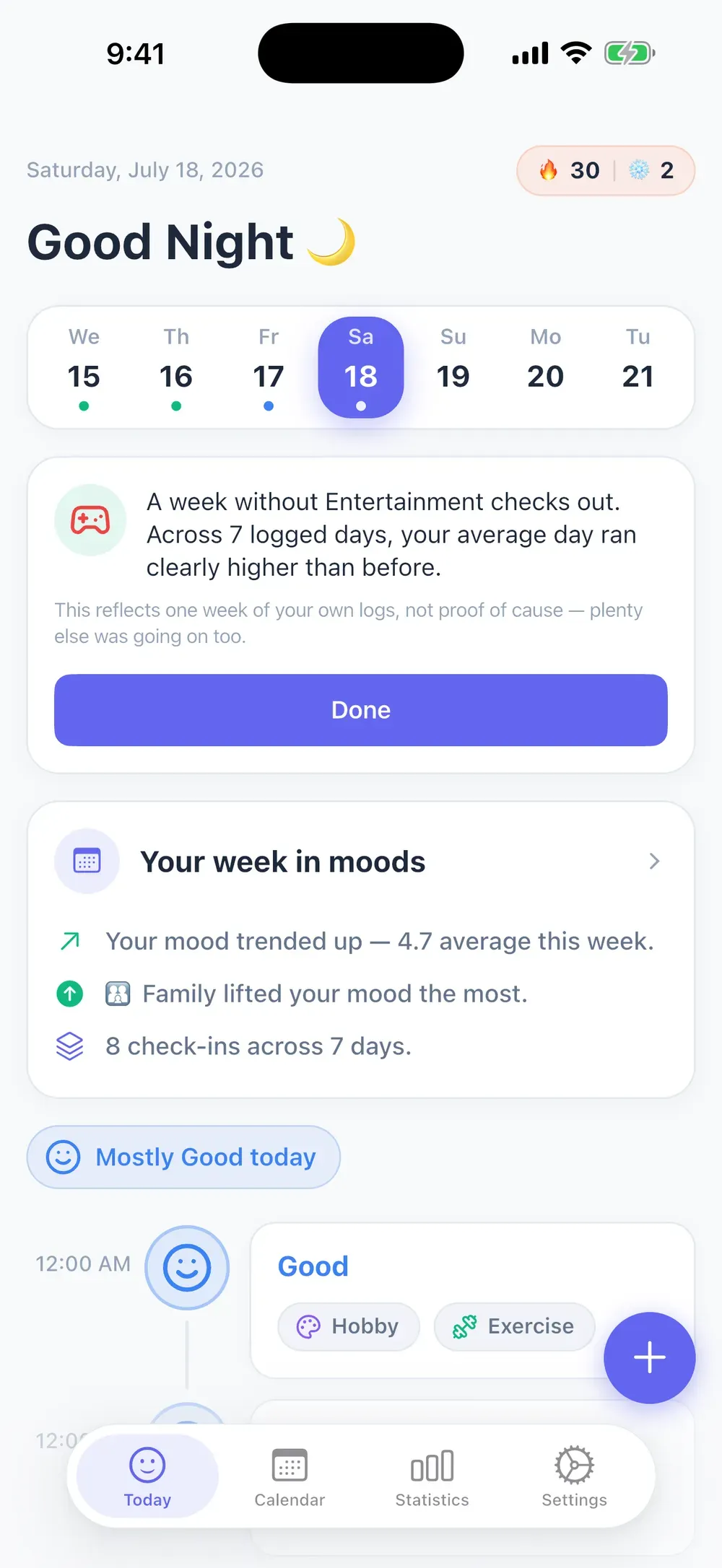
2. Tag every rule when you do it. In MoodKit, each rule becomes a custom activity: “5:30 alarm,” “gym,” “no phone after 9.” When you check in (a fifteen-second entry, a couple of times a day), tag the rules you kept. That’s the entire logging overhead, and the streak with banked freezes covers the days you forget.
3. Read the leaderboard at two weeks. After about 14 entries, MoodKit’s Impact Leaderboard ranks every activity by its measured effect on your mood, with day counts alongside. Your three rules sit in that ranking next to everything else you tagged. One of them is usually near the top. One is usually nowhere.
| Rule | Tag it as | What you’re looking for by week 3 |
|---|---|---|
| Early alarm | ”5:30 alarm” | Higher mood on alarm days than not, and no slide in Health sleep |
| Gym or run | ”gym” | A lift that holds on days you trained, not just an afterglow |
| Phone curfew | ”no phone after 9” | Better mood the next morning, which needs a next-day check |
| Reading | ”read” | Often flat on the leaderboard: pleasant, not a mood driver |
| No alcohol | ”no alcohol” | Compare with the Sober October guide |
Facts checked September 2026.
Run the arc as experiments, not vows
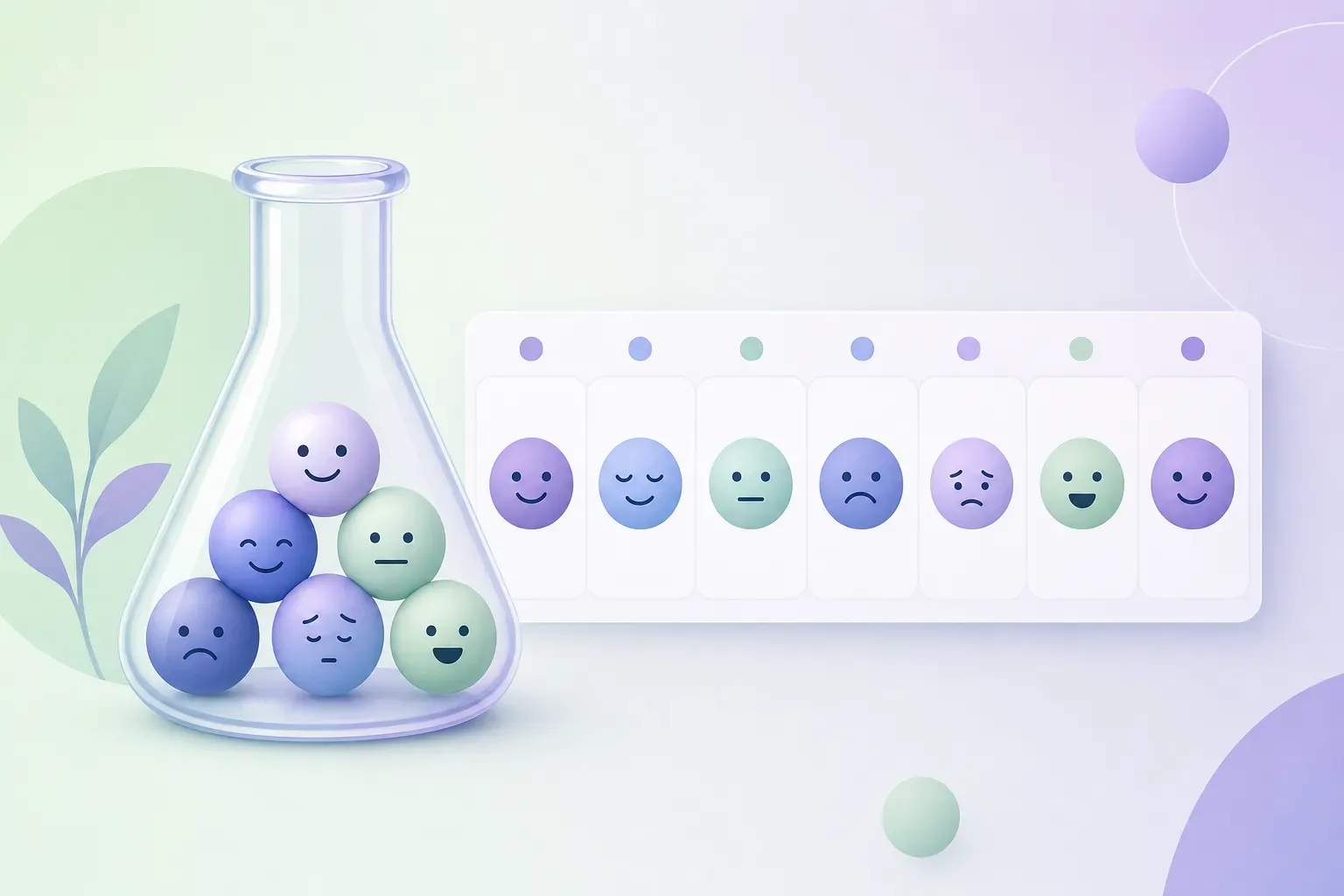
A vow is all-or-nothing for 90 days. An experiment is one week with a verdict at the end. MoodKit’s self-experiments take a rule and test it properly: try a habit for a week and get a verdict against your own baseline; skip a habit you already have to see if it was quietly dragging you down; or test a next-day effect, which is how you find out whether the phone curfew actually buys you a better morning.
The practical rhythm: weeks one and two, log with the tags and let the leaderboard form. Weeks three through twelve, run one experiment at a time on whichever rule the leaderboard makes you curious about, and drop the rule that the data says is doing nothing. That last part is the hard one. Winter Arc culture treats dropping a rule as failure. The data treats it as finding out.
When the arc backfires
Two signals mean the arc is hurting, and both show up in a tracker before they show up in your head. First, your average mood slides for two straight weeks while you’re keeping every rule; in MoodKit, the monthly comparison at 30 entries makes that visible. Second, sleep, exercise, or steps from Apple Health rank as drivers against you, which is what an alarm that steals sleep looks like in the numbers. When either happens, the rules are the problem, not your discipline, and the season may be part of it. If the dip is deep or doesn’t lift, that belongs with a professional rather than a challenge. Not medical advice.
MoodKit’s limits here: it won’t remind you of the rules themselves (reminders are for check-ins), there’s no Apple Watch app, and the deeper insight cards are Premium after the free trial ($39.99 a year or $79.99 once; logging itself is free). What it does is the part the trend leaves out: turn 90 days of trying into a ranking of what worked.
Frequently asked questions
What is the Winter Arc?
A self-improvement challenge that runs from October 1 to the end of December, popularized on TikTok, where you set your own rules (early alarms, workouts, no doomscrolling, reading) and hold them through the dark months instead of waiting for New Year's resolutions.
When does the Winter Arc start and end?
Most people start on October 1 and run through December 31, about 90 days. Some versions end on January 1 or run to the spring equinox. There are no official dates or rules; the constant is starting in autumn.
How many rules should a Winter Arc have?
Three you can measure beats ten you can't. Pick habits that fit in a normal day, tag each one when you do it, and let two weeks of mood data decide which ones earn a place for the rest of the arc.
Can the Winter Arc make you feel worse?
Yes, if the rules are punishing and the season is already pulling your mood down. Tracking is the safety check: if your average slides for two weeks while you're keeping every rule, the rules are the problem, not your discipline.
Keep reading
Self-Experiments: Test What Actually Lifts Your Mood
The n-of-1 method for mood: how to test one habit for one week and get an answer you can trust — including the traps that fool most self-experimenters.
· 4 min read

The Dopamine Menu, Data-Tested: Keep What Actually Works
Dopamine menus are everywhere in 2026. Most are guesses. Here's how to build one, then let two weeks of mood data promote or fire every item on it.
· 4 min read

Autumn Mood Dips: Build Your Seasonal Baseline Now
Days are shortening and September moods are already sliding. How to track a seasonal pattern properly, when the data means something, and when to get help.
· 3 min read